


The Second Boer War (1899–1902) involved a wide range of individuals who played significant roles as military leaders, political figures, or influential civilians on both the British and Boer sides, as well as foreign volunteers and affected populations. Below is a concise overview of key people involved, grouped by their affiliations and roles, based on historical records.
Boer Republics (South African Republic and Orange Free State)
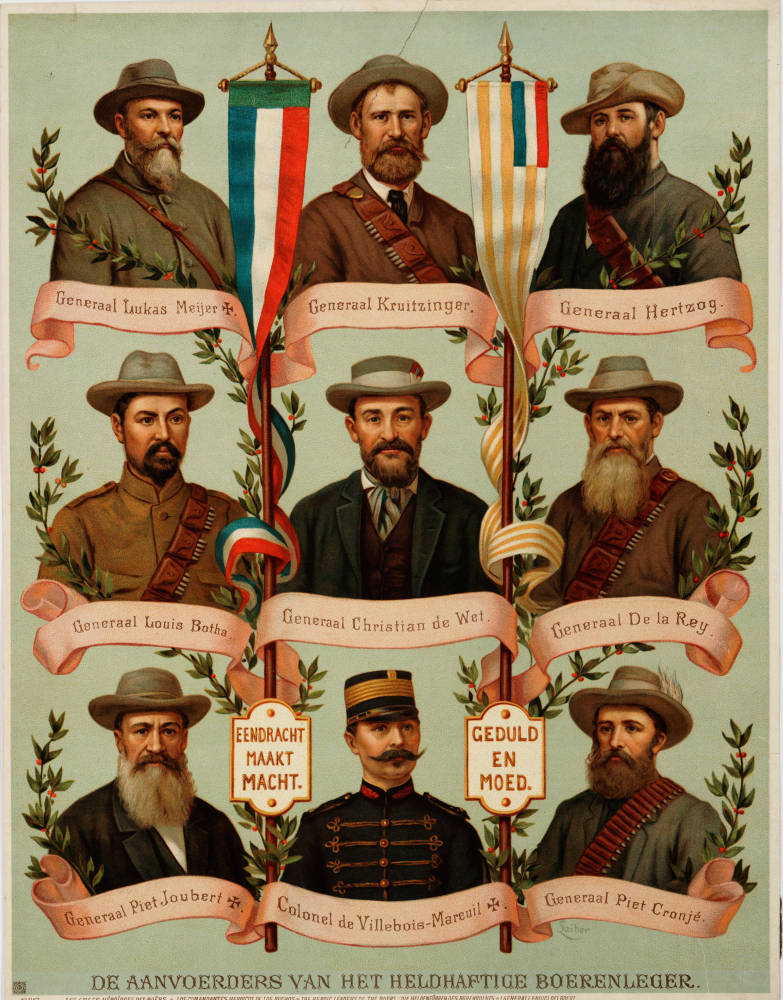
- Paul Kruger:
- Role: President of the South African Republic (Transvaal).
- Significance: Central political figure, led Boer resistance diplomatically. His ultimatum to Britain in 1899 sparked the war. Exiled to Europe in 1900, seeking international support.
- Louis Botha:
- Role: Boer general, later first Prime Minister of the Union of South Africa.
- Significance: Commanded Boer forces at battles like Colenso and Spion Kop. Led guerrilla operations and negotiated peace in 1902.
- Christiaan de Wet:
- Role: Boer general and guerrilla leader.
- Significance: Master of mobile warfare, led ambushes like Sanna’s Post and Tweebosch. Key figure in prolonging the guerrilla phase.
- Piet Cronjé:
- Role: Boer general.
- Significance: Led Boer victories at Magersfontein and Modder River but surrendered at Paardeberg (1900) after being besieged.
- Jan Smuts:
- Role: State Attorney of Transvaal, later guerrilla leader.
- Significance: Organized raids into Cape Colony during guerrilla phase. Later a key figure in South African politics.
- Koos de la Rey:
- Role: Boer general.
- Significance: Known for victories like Nooitgedacht and leadership in western Transvaal. Respected for tactical skill.
- Ben Viljoen:
- Role: Boer general.
- Significance: Led guerrilla operations in eastern Transvaal, fought at Nooitgedacht. Captured in 1902.
British Empire
- Frederick Roberts (Lord Roberts):
- Role: British Field Marshal, Commander-in-Chief (1900).
- Significance: Turned tide with victories at Paardeberg, Bloemfontein, and Pretoria. Implemented scorched-earth policy.
- Redvers Buller:
- Role: British general.
- Significance: Led initial campaigns in Natal, failed at Colenso and Spion Kop but relieved Ladysmith. Replaced by Roberts.
- Herbert Kitchener (Lord Kitchener):
- Role: British general, succeeded Roberts.
- Significance: Oversaw guerrilla phase, built blockhouses, and used scorched-earth tactics and concentration camps. Negotiated peace in 1902.
- Robert Baden-Powell:
- Role: British colonel.
- Significance: Defended Mafeking during 217-day siege, boosting British morale. Later founded the Scout Movement.
- John French:
- Role: British cavalry general.
- Significance: Relieved Kimberley and led mobile operations. Key in early British counteroffensive.
- Cecil Rhodes:
- Role: Businessman, politician, and Cape Colony figure.
- Significance: Trapped in Kimberley during siege, influenced British imperial policy. His presence raised stakes for relief efforts.
- Alfred Milner:
- Role: British High Commissioner for South Africa.
- Significance: Advocated war to secure British dominance. Negotiated peace terms in 1902.
Foreign Volunteers and Supporters
- Georges de Villebois-Mareuil (France):
- Role: French colonel, led foreign volunteers.
- Significance: Commanded Boer foreign legion, killed at Boshof (1900). Symbol of European support.
- John MacBride (Ireland):
- Role: Leader of Irish Transvaal Brigade.
- Significance: Led Irish volunteers against British, driven by anti-imperialism. Later executed in 1916 Irish Rising.
- Yevgeny Maximov (Russia):
- Role: Russian volunteer officer.
- Significance: Fought in Boer commandos, representing Russian sympathy for Boer cause.
Civilian and Other Figures
- Emily Hobhouse:
- Role: British humanitarian.
- Significance: Exposed harsh conditions in British concentration camps, advocating for Boer women and children. Influenced reforms.
- Olive Schreiner:
- Role: South African author and activist.
- Significance: Criticized British imperialism and war policies, voiced pro-Boer sentiments.
- Mahatma Gandhi (then Mohandas Gandhi):
- Role: Indian stretcher-bearer in British service.
- Significance: Organized Indian Ambulance Corps in Natal, aiding British wounded. Early non-violent activism.
Affected Populations
- Boer Civilians: Tens of thousands, mostly women and children, were interned in British concentration camps, where ~26,000–28,000 died due to disease and malnutrition.
- African Populations: Black South Africans served as scouts, laborers, or combatants for both sides. Many were interned in separate camps (~20,000 deaths). Their role was often marginalized in historical accounts.
- Uitlanders: Foreign (mostly British) workers in Transvaal goldfields, whose grievances over voting rights fueled British pre-war demands.
Key Observations
- Boer Leadership: Combined political (Kruger, Smuts) and military (Botha, de Wet) figures drove resistance, adapting from conventional to guerrilla warfare.
- British Command: Roberts and Kitchener’s strategic shifts overcame early defeats, but harsh tactics (concentration camps, scorched-earth) stirred controversy.
- Foreign Volunteers: Around 2,000–3,000 from Europe (Netherlands, Germany, France) and elsewhere fought for Boers, though their impact was limited.
- Civilian Impact: War profoundly affected Boer and African civilians, with concentration camps leaving a lasting legacy of resentment.